Using effects for character
The effects are where a sound is finished: placed in a space, given warmth, and set moving. This guide is about reaching for them as a set to shape character, rather than tuning one effect at a time. The effects feature page covers each one in full.
A useful way to think about the rack is in three jobs: warmth, space and movement. Most finished sounds use some of each.
Warmth and weight
Saturation is what makes a clean digital sound feel solid and analog. The distortion stage and the tape effect both add harmonics: a little thickens and warms, more adds grit and drive. Reach for this first when a patch sounds thin or sterile, before adding anything else, because warmth changes the tone the later effects work on.
Kiwisynth also runs a fixed warmth and a spectral bloom on every note, under the effects, so the instrument has a baseline character before you add any. The saturation in the rack builds on top of that.
Space
Reverb and delay place a sound in a room. They are what turn a dry, close sound into one with depth behind it.
- Reverb is the size and tone of the space. A short reverb is a tight room, a long one is a hall or an open distance. The shimmer reverb adds an octave-up sheen in the tail, which suits pads and textures.
- Delay is distinct repeats, and locked to the tempo it becomes rhythmic. Use it to extend a short sound, a pluck or a stab, without lengthening the note itself, so the dry transient stays sharp and the tail rings behind it.
Keep dry, defined sounds drier and let pads and textures take more space. Too much reverb on a bass or a lead pushes it to the back of the mix.
Movement
Chorus, phaser and flanger add movement to the sound itself rather than placing it in a space.
- Chorus widens and thickens, the classic way to make one oscillator sound like several.
- Phaser and flanger sweep a comb across the sound for a moving, hollow colour. Their Organic mode drifts in a way that never repeats, so the movement sounds analog rather than looped, and a static mode lets you drive the sweep from the mod matrix instead of an internal rate.
These suit held sounds, pads, keys and textures, more than fast percussive ones, where there is no sustain for the movement to act on.
Order matters
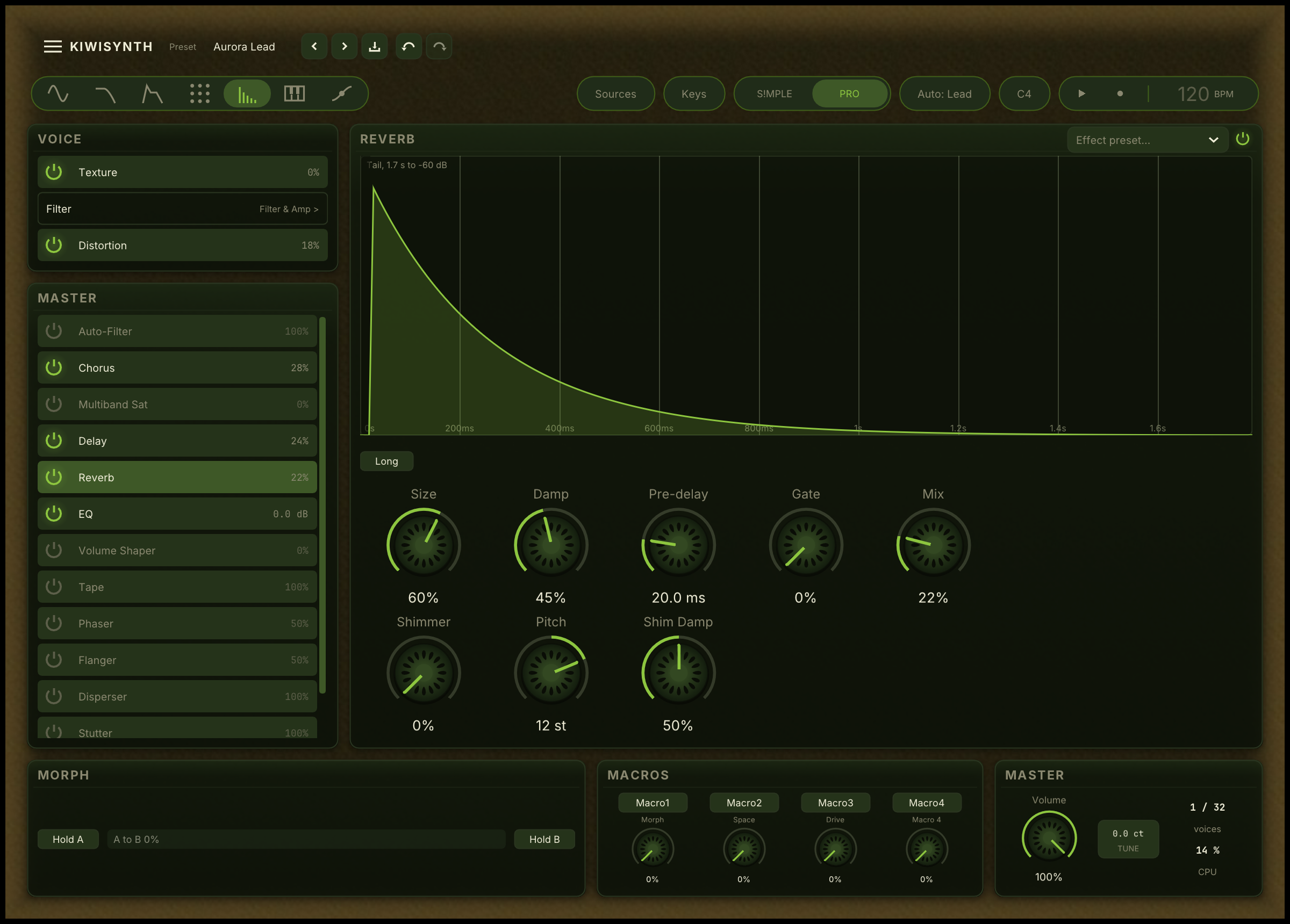
The effects run in a chain, so the order changes the result. Saturation before reverb drives the dry sound and then puts the warmed result in a space, which is usually what you want. Saturation after reverb distorts the tail itself, a rougher, more aggressive effect. When a chain does not sound the way you expect, check the order before changing the settings. See effects for the rack and each effect's controls.
Restraint
Effects flatter a sound in isolation and crowd it in a mix. Set them while listening to the part in context, not solo, and use the least that does the job. A patch that sounds huge on its own often has too much reverb and saturation to sit in a track. The dry sound should already be good; the effects only finish it.